
The 10-Minute Still Warrior Qigong Routine
A gentle 10-minute Qigong routine for active agers to improve joint comfort, calm the nervous system, and build strength without strain.
Bruce R Black
12/16/20253 min read

The 10-Minute Still Warrior Qigong Routine
Gentle Movement for Joint Ease, Calm Strength, and Everyday Longevity
Most people think exercise has to be loud, sweaty, and slightly threatening to be effective.
It doesn’t.
Some of the most powerful joint-healing, confidence-building movements in the world are slow, quiet, and look almost like you’re doing nothing. Ancient traditions figured this out long before gyms, mirrors, and motivational yelling existed.
This is where Qigong and the Still Warrior approach meet.
What follows is a simple, standing, 10-minute routine designed especially for active agers who want to:
Move without pain
Protect their joints
Stay strong without punishment
Feel calmer after exercise instead of wrecked
No floor work.
No equipment.
No heroics.
Just steady, joint-friendly movement you can do every day.
The Benefits of a Still Warrior Qigong Practice
Practiced regularly, this routine can help:
Improve joint lubrication and comfort
Increase shoulder, hip, and spinal mobility
Build gentle strength and joint stability
Reduce stiffness and “rusty” feeling
Calm the nervous system
Improve balance and posture
Restore confidence in movement
Think of it as daily maintenance for the body you plan to keep using.
Important Precautions (Please Read Once)
This routine should feel:
Comfortable
Slow
Calm
Pain-free
Stop or modify if you feel:
Sharp pain
Joint catching or locking
Dizziness
Breath holding
Tension creeping into your face or jaw
Move smaller than you think you need to.
In Qigong, less is more, and slow always wins.
If you’ve had recent surgery or a medical condition, follow your healthcare provider’s guidance.
The 10-Minute Still Warrior Qigong Routine
1. Wuji Standing — The Still Start (1 minute)
How to do it:
Stand with feet hip-width apart
Knees soft, not locked
Spine tall but relaxed
Arms hanging naturally at your sides
Chin level, eyes soft or closed
Breathe slowly into your belly. Let your shoulders melt downward.
Benefits:
Improves posture and balance
Calms the nervous system
Sets the tone for relaxed movement
This may look like nothing — but it’s quietly powerful. You’re telling your body it’s safe to move.
2. Shoulder Circles Like Floating Clouds (2 minutes)
How to do it:
Let your arms hang loosely
Slowly roll your shoulders forward in gentle circles
After 5–6 circles, reverse direction
Keep the movement smooth and unforced
Imagine warm oil spreading through the shoulder joints.
Benefits:
Lubricates the shoulder joints
Reduces neck and upper-back tension
Gently wakes up the rotator cuff
No forcing. No stretching. Just smooth, circular motion.
3. Relaxed Arm Swings (2 minutes)
How to do it:
Swing your arms forward and back like pendulums
Let your torso rotate naturally
Keep your grip loose and your shoulders relaxed
Optional variation:
Swing arms gently side-to-side across the body
Benefits:
Mobilizes shoulders, spine, and rib cage
Encourages natural spinal rotation
Helps release stored tension
This is one of the most underestimated movements in longevity practice. It’s simple — and extremely effective.
4. Holding the Ball (Still Warrior Strength) (2 minutes)
How to do it:
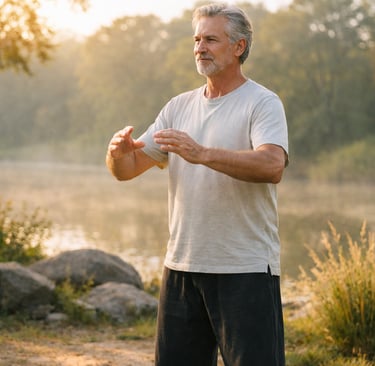
Raise your arms in front of you as if hugging a large beach ball
Elbows soft, shoulders down
Chest relaxed
Hold the position while breathing calmly
Optional:
Slowly raise and lower the “ball” a few inches
Benefits:
Builds shoulder and arm stability
Strengthens posture muscles
Trains relaxed strength without joint strain
This is isometric strength training disguised as stillness. Calm, steady, and joint-friendly.
5. Gentle Knee Bends (2 minutes)
How to do it:
Stand tall with feet grounded
Slowly bend your knees a small amount
Keep your torso upright
Press gently through your feet to stand back up
Use a chair or wall for support if needed.
Benefits:
Nourishes the knee joints
Strengthens legs safely
Improves confidence with standing and walking
Think “springy,” not “squat.” Your knees should feel better afterward, not challenged.
6. Closing: Hands on Belly, Hands on Heart (1 minute)
How to do it:
Place one hand on your belly
One hand on your chest
Breathe slowly and comfortably
Stand quietly and let your body absorb the practice.
Benefits:
Calms the nervous system
Lowers stress hormones
Reinforces a sense of safety and control
This is where the practice truly settles in.
How Often Should You Do This?
Daily is ideal.
This routine is gentle enough to:
Do in the morning to loosen up
Use as an afternoon reset
Practice in the evening to unwind
Consistency matters far more than intensity.
Final Thoughts: Strength Doesn’t Have to Be Loud
The Still Warrior approach isn’t about pushing through pain or chasing exhaustion.
It’s about:
Moving with respect
Building strength quietly
Keeping your joints happy for the long run
Ten calm minutes a day can do more for your body than one intense workout you dread and avoid.
Your future joints will thank you — quietly, of course.
© 2025. All rights reserved.
"Disclaimer: The fitness and exercise information provided on this website is intended for educational purposes only. It is not a substitute for professional medical advice, diagnosis, or treatment. Consult your physician or a qualified health provider before starting any exercise program. The use of any information provided on this site is solely at your own risk. We do not assume liability for any injuries or health issues that may result from using our content."